🔄 MSM Routine: Mirror – Signal – Manoeuvre
1. Mirrors
Check your main interior mirror, then your left door mirror to assess traffic behind and any cyclists/pedestrians on your left.
2. Signal
Signal left in good time—not too early (to avoid misleading others), but early enough to give a clear warning.
3. Position
Move into a normal driving position close to the left side of your lane—do not swing wide like you’re turning right.
4. Speed
Ease off the gas and begin to brake gently. You’ll typically need to slow to about 10–15 mph, or even slower if the turn is sharp or visibility is poor.
5. Gear
Select the correct lower gear (usually 2nd gear, or 1st if it’s very tight or uphill) before the turn.
6. Look
Check the junction for hazards:
-
Pedestrians crossing
-
Parked cars or obstructions on the new road
-
Traffic emerging from the minor road
-
Cyclists on your inside
-
Road markings or signs
7. Turn
Steer smoothly into the minor road.
Keep left and avoid cutting the corner.
Watch for any oncoming traffic turning into the same road.
🚫 Common Mistakes to Avoid
-
Turning too fast or too wide
-
Failing to check mirrors before signalling
-
Not looking for pedestrians or cyclists
-
Braking or changing gear mid-turn
-
Misleading others with an early or late signal
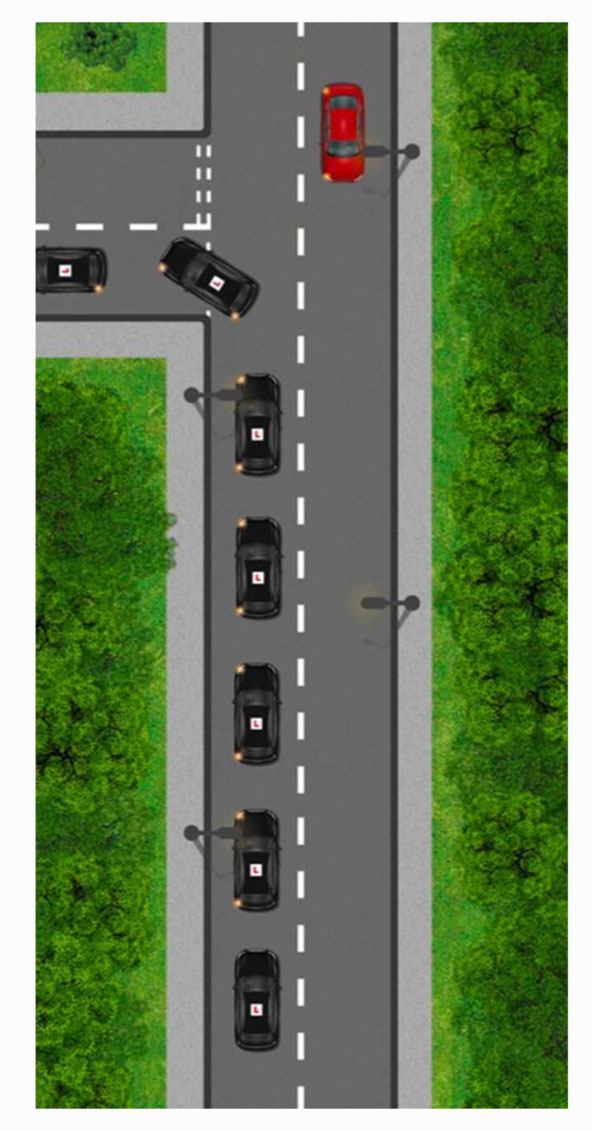
Tyres and tarmac” is a simple rule used in driving to keep a safe stopping distance when you are behind another vehicle.
Meaning
When you stop behind a car, you should be able to see: ✔️ The rear tyres of the car in front
✔️ And a bit of the tarmac (road) touching the ground behind those tyres
This means you are leaving a safe gap.
Why it’s important
Gives you space to move off safely if the vehicle in front breaks down
Prevents you from being too close
Helps avoid rolling into the car in front when moving off.
Very useful in queues, traffic lights, and junctions.

When moving off during your driving lessons, you’ve might have heard your driving instructor say, “make sure to check your blind spots.” But exactly what is a blind spot in a car and why is it so important to check it?
What is a blind spot?
When you’re sat in the driver’s seat of a car, the windscreen, windows, interior mirror and wing mirrors allow you to see what’s around you. However, there are certain places in the car that the mirrors aren’t able to effectively reach. Because the mirrors don’t cover that area properly, you’ll have to turn your head to view what the mirror can’t show you – this is your blind spot.
The size and location of the blind spot can vary depending on the vehicle you are in, but in most cars it will be over the driver’s right shoulder, which commonly leads to a blind spot check being known as a right shoulder check.
Other common blind spots are known as A-pillar blind spots – blind spots created by the columns on the edges of the windscreen.
Why is it important to check your blind spot? 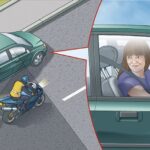
Because it’s an area the mirrors don’t fully cover, there could be other road users you have not seen occupying that space. If you move off in the car without checking that area, you could end up in an accident.
When to check your blind spot
The blind spot check should take place when moving the car off from a stationary position as the last part of your observations, before releasing the handbrake during the POM (Preparation-Observation-Manoeuvre) routine.
During a driving test, the examiner will ask you to pull up on the left next to the kerb, before asking you to move off again when you are ready. You must remember to check your right blind spot before moving off again as the examiner is looking to see if you can pull away safely.
You should also check the appropriate mirrors and right or left blind spot when changing lanes too.
Do you still need to check your blind spots if you have blind spot mirrors?
While blind spot mirrors and other additional tools such as blind spot sensors are useful by covering a greater area, they should only be used as additional aids and not replace your blind spot checks. Not only could they not completely cover your blind spots, but relying on them could result in complacency when driving – particular if driving a different car which doesn’t have them.
On your driving test, your DVSA examiner will ask you one tell me question at the beginning before the car is moving and one show me question during the test while the car is moving.
A show me question requires a demonstration of how you would operate one of the ancillary controls on your car – for example:
“When it is safe to do so, show me how you would check that the horn is working properly.”
A tell me question just requires an explanation.
At orange driving school, we take everything about preparing you for your driving test seriously, so we have provided a printable show me, tell me question sheet so you can practise on your own as well as with your instructor.
Show Me Questions:
1.When it’s safe to do so, can you show me how you wash and clean the rear windscreen?
2.When it’s safe to do so, can you show me how you wash and clean the front windscreen?
3.When it’s safe to do so, can you show me how you’d switch on your dipped headlights?
4.When it’s safe to do so, can you show me how you’d set the rear demister?
5.When it’s safe to do so, can you show me how you’d operate the horn?
6.When it’s safe to do so, can you show me how you’d demist the front windscreen?
7.When it’s safe to do so, can you show me how you’d open and close the side window?
Tell Me Questions:
Q1. Tell me how you’d check that the brakes are working before starting a journey.
Q2. Tell me where you’d find the information for the recommended tyre pressures for this car
and how tyre pressures should be checked.
Q3. Tell me how you make sure your head restraint is correctly adjusted so it provides the best
protection in the event of a crash.
Q4. Tell me how you’d check that the headlights and tail lights are working. You don’t need to
exit the vehicle.
A. Brakes should not feel spongy or slack. Brakes should be tested as you set off. Vehicle should not
pull to one side.
A. Manufacturer’s guide, use a reliable pressure gauge, check and adjust pressures when tyres are
cold, don’t forget spare tyre, remember to refit valve caps.
A. The head restraint should be adjusted so the rigid part of the head restraint is at least as high as
the eye or top of the ears, and as close to the back of the head as is comfortable. Note: Some
restraints might not be adjustable.
A. Explain you’d operate the switch (turn on ignition if necessary), then walk round vehicle (as this is
a ‘tell me’ question, you don’t need to physically check the lights).
Q5. Tell me how you’d know if there was a problem with your anti-lock braking system.
A. Warning light should illuminate if there is a fault with the anti-lock braking system.
Q6. Tell me how you’d check the tyres to ensure that they have sufficient tread depth and that
their general condition is safe to use on the road.
A. No cuts and bulges, 1.6mm of tread depth across the central three-quarters of the breadth of the
tyre, and around the entire outer circumference of the tyre
Q7. Tell me how you’d check the direction indicators are working. You don’t need to exit the
vehicle.
Q8. Tell me how you’d check the brake lights are working on this car.
Q10. Tell me how you switch your headlight from dipped to main beam and explain how you’d
know the main beam is on.
Q9. Tell me how you’d check the power-assisted steering is working before starting a journey.
A. Explain you’d operate the switch (turn on ignition if necessary), and then walk round vehicle (as
this is a ‘tell me’ question, you don’t need to physically check the lights).
A. Explain you’d operate the brake pedal, make use of reflections in windows or doors, or ask
someone to help.
A. Operate switch (with ignition or engine on if necessary), check with main beam warning light.
A. If the steering becomes heavy, the system may not be working properly. Before starting a journey,
2 simple checks can be made.
Gentle pressure on the steering wheel, maintained while the engine is started, should result
in a slight but noticeable movement as the system begins to operate. Alternatively turning the
steering wheel just after moving off will give an immediate indication that the power assistance is functioning.
Q10. Tell me how you switch your headlight from dipped to main beam and explain how you’d
know the main beam is on.
A. Operate switch (with ignition or engine on if necessary), check with main beam warning light.
Q11. Tell me how you’d switch on the rear fog light(s) and explain when you’d use it/them. You
don’t need to exit the vehicle.
A. Operate switch (turn on dipped headlights and ignition if necessary). Check warning light is on.
Explain use.
Q12. Open the bonnet and tell me how you’d check that the engine has sufficient oil.
A. Identify dipstick/oil level indicator, describe check of oil level against the minimum and maximum
markers.
Q13. Open the bonnet and tell me how you’d check that the engine has sufficient engine
A. Identify high and low level markings on header tank where fitted or radiator filler cap, and describe
how to top up to correct level.
Q14. Open the bonnet and tell me how you’d check that you have a safe level of hydraulic brake
fluid.
A. Identify reservoir, check level against high and low markings.
Turning right from a major to a minor road can be tricky, especially with oncoming traffic. Here’s a step-by-step guide to help you do it safely and correctly:
✅ Steps to Turn Right from a Major to Minor Road (UK)
1. Mirrors – Signal – Position (MSM routine)
-
Check mirrors: Centre mirror, then right mirror.
-
Signal: Right signal in good time.
-
Position: Move just left of the centre line (or into a marked right-turn lane if available).
2. Speed – Look – Assess
-
Slow down: Use your brake gently to reduce speed.
-
Look ahead and to your right for oncoming traffic.
-
Assess the situation: Be patient and wait for a safe gap.
3. Give Way to Oncoming Traffic
Only turn when it’s safe and clear. Oncoming vehicles have priority.
4. Turn when safe
-
Steer smoothly into the left side of the minor road.
-
Avoid cutting the corner (don’t swing too early).
-
Watch for pedestrians crossing the minor road.
5. Cancel your signal
Cancel your signal (if needed) and check mirrors again as you complete the turn.
🔺 Tips for Safety
-
Do not hesitate too long once it’s safe – this could confuse other drivers.
-
Be aware of cyclists or motorbikes filtering on your right.
-
If in doubt, wait – better to be safe than rushed.
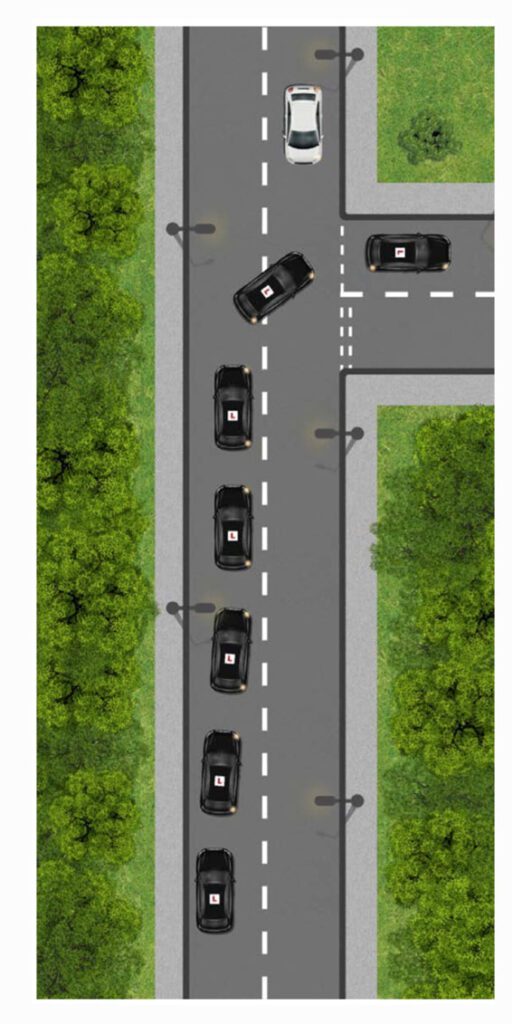
If you’ve booked your first driving lesson or are currently considering your options, you’re probably wondering what happens on your first driving lesson. We’re here to help and have outlined what generally happens from start to end on your first driving lesson.
There are myths that you can spend the whole one or two-hour lesson stationary and the car doesn’t move. We have heard of companies out there that do that, but it’s not something we practice at Orange Driving School.
Our goal at Orange Driving School is to get you driving as quickly as possible on your first lesson without compromising your safety.
Here’s generally what happens from the beginning to the end of the lesson:
1. Meet & Greet
Your instructor will introduce themselves, check your provisional licence, and confirm your eyesight (you’ll be asked to read a number plate from 20 metres).
They’ll explain the plan for the lesson and reassure you — nobody expects you to drive like a pro on day one.
2. Getting to Know the Car
-
Seating position – adjusting the seat, mirrors, and steering wheel so you’re comfortable.
-
Controls – going over pedals (accelerator, brake, clutch in manual), steering, gears, handbrake, indicators, and dashboard symbols.
This is sometimes called the “cockpit drill”.
3. Basic Safety Checks
Learning about blind spots, mirror checks, and how to make sure the car is safe before moving.
4. Moving Off & Stopping
On quiet roads or a safe area, you’ll practise:
-
Starting the engine.
-
Using the correct procedure to move off (mirror-signal-manoeuvre).
-
Steering control.
-
Gently braking to a smooth stop.
5. Very Basic Driving Practice
You might only drive a short distance at first — just enough to get the feel of the car.
Your instructor will guide you through every step, talking you through what to do.
6. Recap & Feedback
At the end, your instructor will review what went well and what to work on next time.
They’ll answer questions and book your next lesson.
💡 Tip: Wear comfortable shoes, bring your provisional licence, and don’t stress — the first lesson is all about getting familiar with the car, not passing the test.
Dealing with crossroads safely and correctly is a key part of driving. Here’s a clear and structured guide to help you:
🚦 What is a Crossroad?
A crossroad is where two roads cross each other (like a “+” shape). Traffic may approach from ahead, behind, and both sides.
✅ Steps to Deal with Crossroads
1. MSPSL Routine (for turning or emerging)
- Mirrors: Check your mirrors early (especially the rear and side relevant to your turn).
- Signal: Signal clearly if you’re turning.
- Position: Position your car correctly (left lane for left turn, right for right).
- Speed: Slow down in good time. Be prepared to stop.
- Look: Look both ways—ahead, right, left, ahead again.
👀 Approaching a Crossroad
A. Open or Closed View
Open: You can clearly see traffic on the crossing road.
Closed: Your view is blocked by buildings or parked cars — approach slowly and be ready to stop.
B. Controlled or Uncontrolled
Controlled: Traffic lights or give-way signs help control who goes.
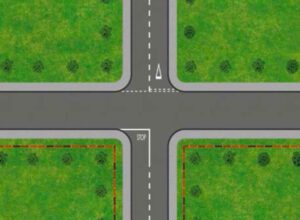
Uncontrolled: No signs/lights — you must judge priority carefully.
↩️↪️ Turning at Crossroads
🔷 Turning Left
- Keep to the left.
- Check for pedestrians and cyclists.
- Watch traffic coming from the right and ahead.
🔷 Turning Right (Major to Minor)
- Position just left of the centre line.
- Wait for a safe gap in oncoming traffic.
- Yield to traffic going straight or turning left.
🔷 Turning Right (Crossroad, Oncoming Also Turning Right)
Make an offside‑to‑offside turn (pass right side to right side). Safer and gives better visibility.
⚠️ Watch for These Risks
- Hidden vehicles (behind parked cars, bushes)
- Cyclists or motorbikes
- Pedestrians crossing as you turn
- Cars turning from side roads
- Drivers not signaling
🧠 Tips
- Never assume others will give way.
- If unsure, stop and wait.
- Don’t block the junction.
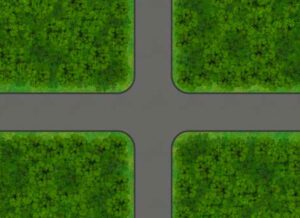
Practise scanning: right, left, ahead again
before moving.
Uncontrolled crossroad
Controlled crossroad
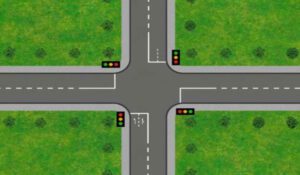
Traffic light controlled crossroad
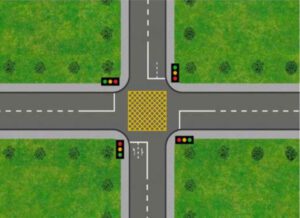
Crossroad with yellow box junction
A Speed Awareness Course is an educational alternative to receiving points and a fine for a minor speeding offence in the UK. Instead of being penalised with points on your driving licence, you attend a course that helps you understand the risks and consequences of speeding, and encourages safer driving.
📌 Key facts about the course:
Eligibility: You may be offered the course if:
-
It’s your first speeding offence in the last 3 years.
-
Your speed was just over the limit (e.g. up to 10% + 9 mph above the limit).
-
The police force handling the offence offers the course.
Duration: Usually around 4 hours long, often held online or in-person.
Content: Covers:
-
Why speed limits exist.
-
Stopping distances and road safety.
-
Hazards of speeding.
-
How to avoid speeding in future.
Cost: Typically £80–£100, paid by the offender.
✅ Benefits:
-
No points on your licence.
-
No increase in insurance premiums (usually).
-
Promotes safer, more responsible driving.
⚠️ If you ignore or decline the offer, you’ll usually face a fixed penalty notice (fine + 3 points) or possibly a court summons.
📊 Speed Limit & Course Eligibility
| Speed Limit | Max Speed for Course Offer | Likely Outcome Above This Speed |
|---|---|---|
| 20 mph | Up to 31 mph | Points + fine or court |
| 30 mph | Up to 42 mph | Points + fine or court |
| 40 mph | Up to 53 mph | Points + fine or court |
| 50 mph | Up to 64 mph | Points + fine or court |
| 60 mph | Up to 75 mph | Points + fine or court |
| 70 mph | Up to 86 mph | Points + fine or court |
📝 Notes:
-
These are guidelines, not strict rules. Each police force may use its own policy.
-
If your speed exceeds the maximum shown, you’re unlikely to be offered the course.
-
Even if you’re under the threshold, you might not be offered the course if you’ve taken one in the past 3 years.
A box junction is a yellow box with yellow crosses painted on the road.
You’ll find it at junctions — usually crossroads, but also sometimes at T-junctions.
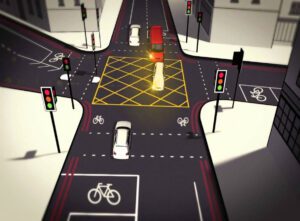
🎯 Purpose
The box junction is designed to keep the junction clear and prevent traffic from blocking it, especially during congestion.
📜 UK Rules (Highway Code, Rule 174):
-
❌ You must not enter a box junction unless your exit is clear.
-
✅ The only exception is when you’re turning right and are stopped in the box only because oncoming traffic or other vehicles waiting to turn right are blocking your path.
⚠️ If your vehicle stops inside the box when your exit isn’t clear, you can be fined (commonly enforced by CCTV in some cities).
📝 Key Points to Remember
-
✅ Check your exit — before entering, make sure there’s enough space beyond the box for your vehicle.
-
🚗 Don’t follow blindly — don’t follow the car in front unless you’re sure it will clear the box.
-
🔄 Turning right is the only lawful reason to wait in the box, and only if the obstruction is oncoming traffic.
Nearside to Nearside Turning
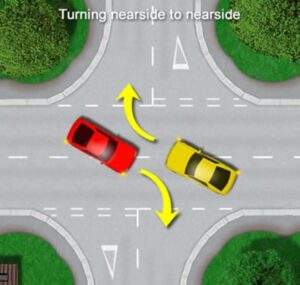
Near-side to near-side turning is a method of turning right at a crossroads where both vehicles keep to their own left sides of the road (their near side) as they turn.
🚘 What does it look like?
Imagine two cars facing each other, both signalling to turn right.
In near-side to near-side:
-
Each car turns in front of the other vehicle (not behind).
-
They both stay on their own side of the road as much as possible.
-
It’s like a short, direct right turn.
✅ Advantages:
-
Visibility of oncoming traffic is usually better.
-
Simple in marked junctions where road markings guide the turn.
-
More common at staggered or offset crossroads or when there’s a central island.
⚠️ Disadvantages:
-
Hard to see the vehicle you’re crossing in front of, especially if it’s a large vehicle.
-
Risk of collision if both drivers turn at the same time without good observation.
💡 Tip to identify:
Look for road markings, traffic islands, or signs that guide the turn in front of each other — that usually means near-side to near-side is expected.
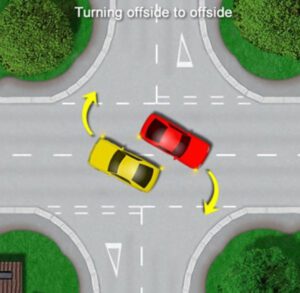
🔄 Opposite of Nearside to Nearside (Offside to Offside):
That would be offside to offside, where both vehicles turn behind each other — better for visibility but takes more space.
🔁 What is Offside to Offside Turning?
When both you and an oncoming vehicle are turning right, you pass each other offside (driver’s side to driver’s side), meaning:
-
You turn behind the oncoming vehicle.
-
This often happens when there’s a central marked area or box junction.
✅ Key Points to Remember:
-
Positioning: Move just left of the centre line of your road.
-
Wait: Stay behind the oncoming vehicle turning right.
-
Visibility: Clearer view ahead as you’re not blocking each other’s line of sight.
-
Safety: Safer at busy junctions or where there’s space to wait in the middle.
-
Road Markings: Always follow painted guides or arrows.
↔️ Compare to Nearside to Nearside:
| Feature | Offside to Offside | Nearside to Nearside |
|---|---|---|
| Turn behind or in front of oncoming vehicle? | Behind (driver side to driver side) | In front (passenger side to passenger side) |
| Visibility of traffic ahead | Better | Restricted |
| Safer at busy crossroads? | Yes | Not ideal |
| Common in the UK? | More common | Less common, but still used where space is tight |

